PIs
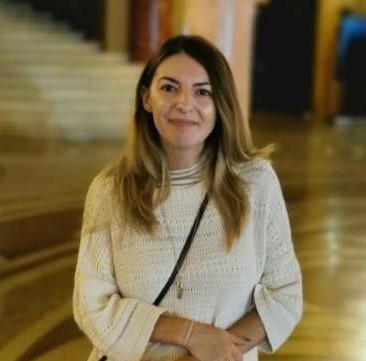
Markus Kneer holds the Chair of Ethics of Artificial Intelligence at the IDea_Lab, University of Graz. He is also the director of the Guilty Minds Lab, and a Research Associate at the Digital Society Initiative, University of Zurich. Markus Kneer works on language, mind, ethics and AI. His research, which is both theoretical and empirical in nature, has appeared in prestigious outlets in philosophy (Nous, Australasian Journal of Philosophy, Linguistics & Philosophy), cognitive science (Cognition, Cognitive Science), computer science (ACM Computer Surveys, ACM THRI, ACM CHI) and general science journals such as the Proceedings of the National Academy of Science.
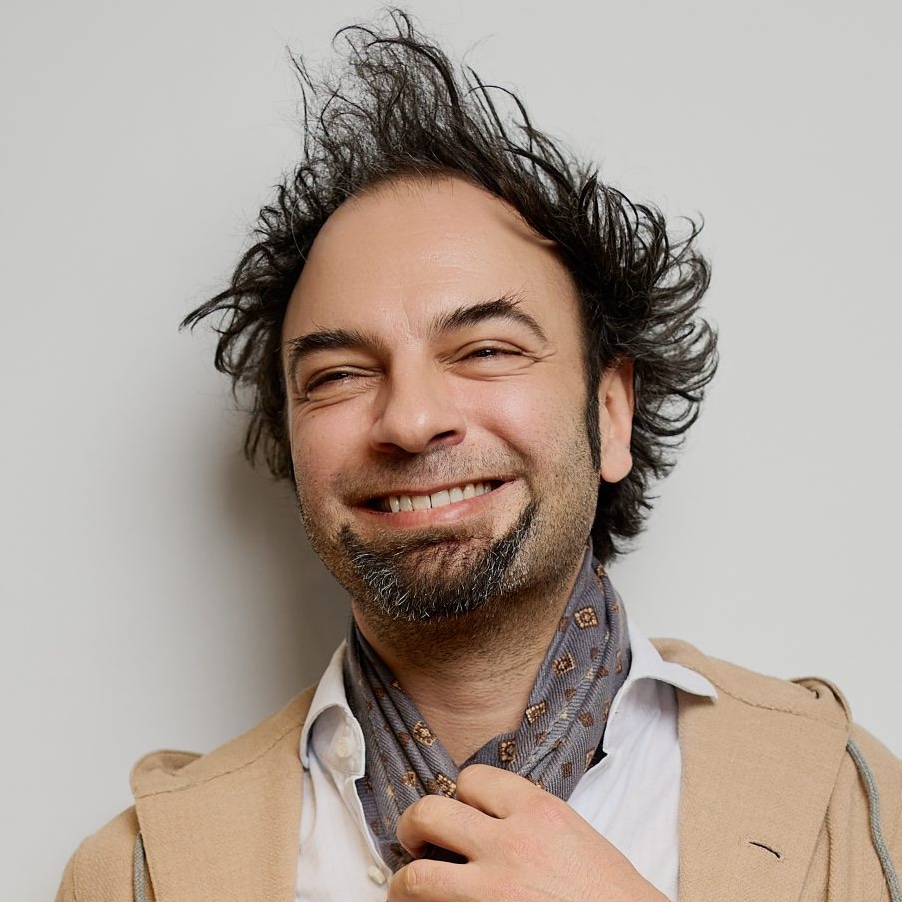
Izabela Skoczeń is an assistant professor at the Jagiellonian University in Kraków and a member of the Jagiellonian Centre for Law, Language and Philosophy in Kraków. Her research interests include experimental jurisprudence, cognitive science, philosophy of language and philosophy of law. In 2019 she published a book ‘Implicatures within Legal Language’ in the Springer Law and Philosophy Library, she has published experimental articles in journals such as Cognition, Synthese, Ratio Juris, the Leiden Journal of International Law, German Law Journal, the International Journal for the Semiotics of Law or Intercultural Pragmatics.
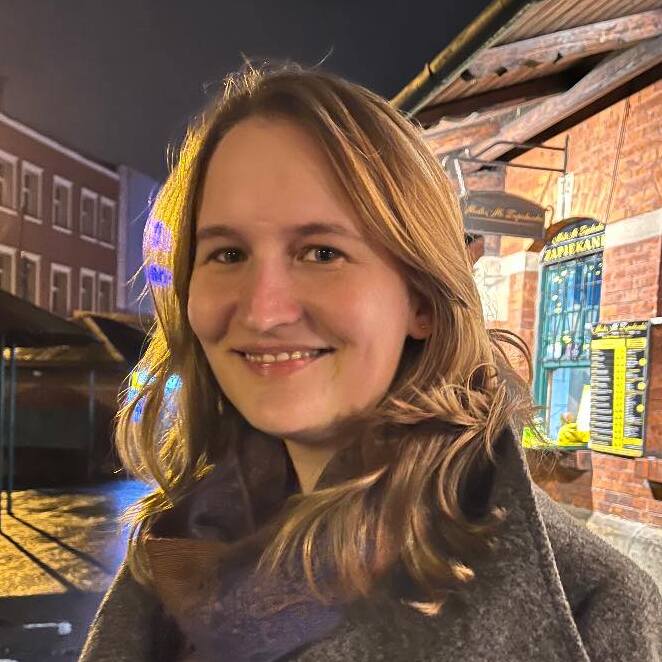
Mihaela Constantinescu is lecturer at the Faculty of Philosophy, University of Bucharest, Romania, and executive director of the Research Center in Applied Ethics (CCEA). Her research areas include Human-Robot Interaction, AI ethics, business ethics, and virtue ethics, with a focus on the normative interplay between the concepts of moral responsibility and moral agency in relation to individuals, organisations, and AI systems. Between 2024-2028 Mihaela is the PI of the ERC Starting grant avataResponsibility: “Avatar agency. Moral responsibility at the intersection of individual, collective, and artificial social entities in emergent avatar communities”.
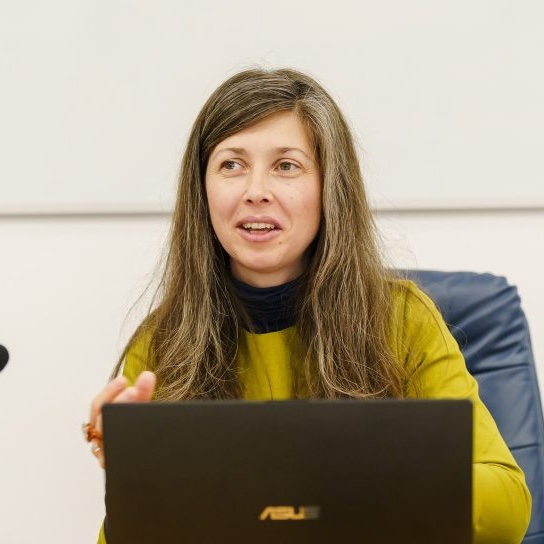
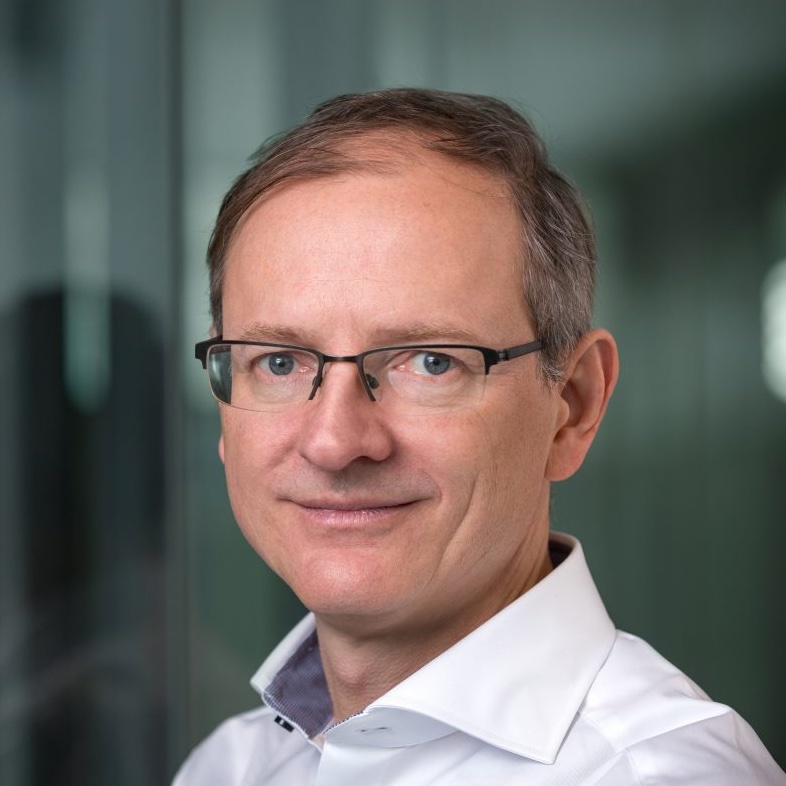
Markus Christen is Managing Director of the Digital Society Initiative of the University of Zurich (UZH) and leads the Digital Ethics Lab at the Institute of Biomedical Ethics and History of Medicine at UZH. His research interests are in digital ethics (AI, autonomous systems, cybersecurity), empirical ethics, and neuroethics. He published more than 150 publications and 15 monographs and edited volumes in various domains (health/technology ethics, philosophy, neuroscience).
Postdocs
Serhiy Kandul is a postdoctoral researcher at the Institute of Biomedical Ethics and History of Medicine (IBME) the University of Zurich. Before joining the IBME, he was a postdoctoral fellow at the Digital Society Initiative (DSI). Serhiy also worked as a visiting lecturer at the Institute of Economic Research of the University Neuchatel and at the Kyiv School of Economics. Serhiy holds a PhD in applied microeconomics (PhD program at the Max Planck Institute of Economics in Jena, Germany). His interests are behavioral and experimental economics, pro-social and moral behavior, experimental ethics. In his current research, Serhiy investigates people’s perceptions of algorithmic decision making.

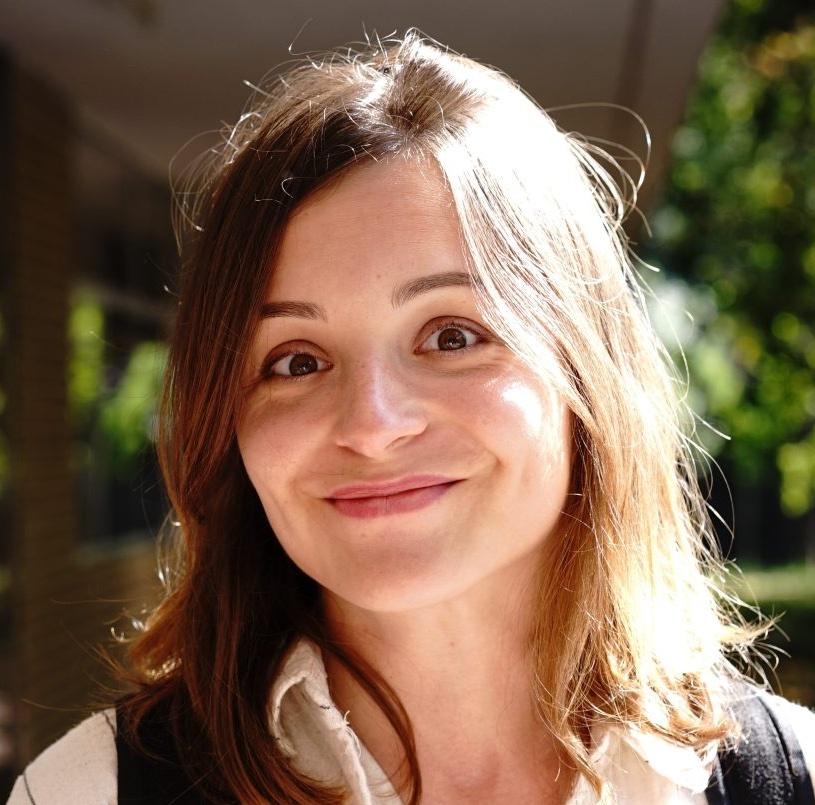
Cristina Voinea is a hosted researcher at the Oxford Uehiro Institute, University of Oxford, and a research fellow at the Research Center in Applied Ethics at the University of Bucharest. In 2023, Cristina was awarded a Marie Skłodowska-Curie Postdoctoral Fellowship, under the supervision of Roger Crisp, to study the impact of digital technologies on individual and collective well-being. Her research examines the ethics of personalizing large language models, exploring themes such as griefbots, digital doppelgangers, and their effects on user well-being.
Miklós Kürthy is a postdoctoral researcher at the University of Graz. Trained in linguistics, cognitive science, and philosophy, he combines experimental and statistical approaches with philosophical and linguistic analysis to study moral cognition, epistemic virtues, and, more recently, misinformation and misleading communication.

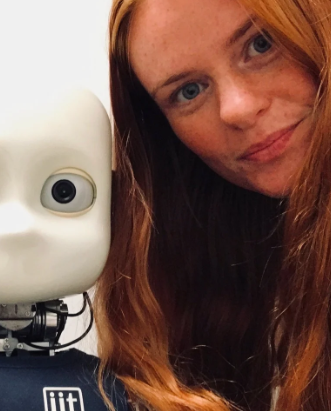
Ziggy O’Reilly is a postdoctoral researcher at the University of Zurich. Her research interests include social and moral cognition, human-robot interaction, human-AI interaction, and digital/robot ethics. She completed her doctoral training in Psychological Science at the Social Cognition in Human-Robot Interaction lab at the Italian Institute of Technology, under the supervision of Prof. Agnieszka Wykowska. With interdisciplinary interests spanning science, ethics, and the arts, she has been a visiting researcher at the Australian e-Health Research Centre, CSIRO, investigating whether children attribute minds to robots, at the Bioethics Centre, Yale University, exploring the ethical implications of emotional attachment to robots, and at the Kapelica Gallery, investigating individuals responses to robots in media installations.
Doctoral students
Jakub Figura is a PhD student at the Doctoral School of Social Sciences at the Jagiellonian University in the Society of the Future programme and the NIHAI project, under the supervision of Prof. Izabela Skoczeń. He holds a master’s degree in law from the Jagiellonian University and currently is pursuing bachelor’s degree in applied computer science. His research interests are related to AI & Law, machine learning, natural language processing, legal theory, logic, and quantitative methodology in social sciences.


Kacper Poradzisz finished law and currently studies philosophy at the Jagiellonian University. His research interests are philosophy of artificial intelligence, social epistemology and
experimental philosophy, especially experimental philosophy of law.
Alexandra Zorila is a PhD student at the Faculty of Philosophy, University of Bucharest. Her research focuses on the ways emerging technologies shape personal identity and self-understanding, with a particular interest in the ethical questions raised by artificial intelligence and other digital technologies. Her work sits at the intersection of philosophy of mind, ethics, philosophy of culture and philosophy of technology, exploring how technological systems influence agency, authenticity, and moral responsibility.
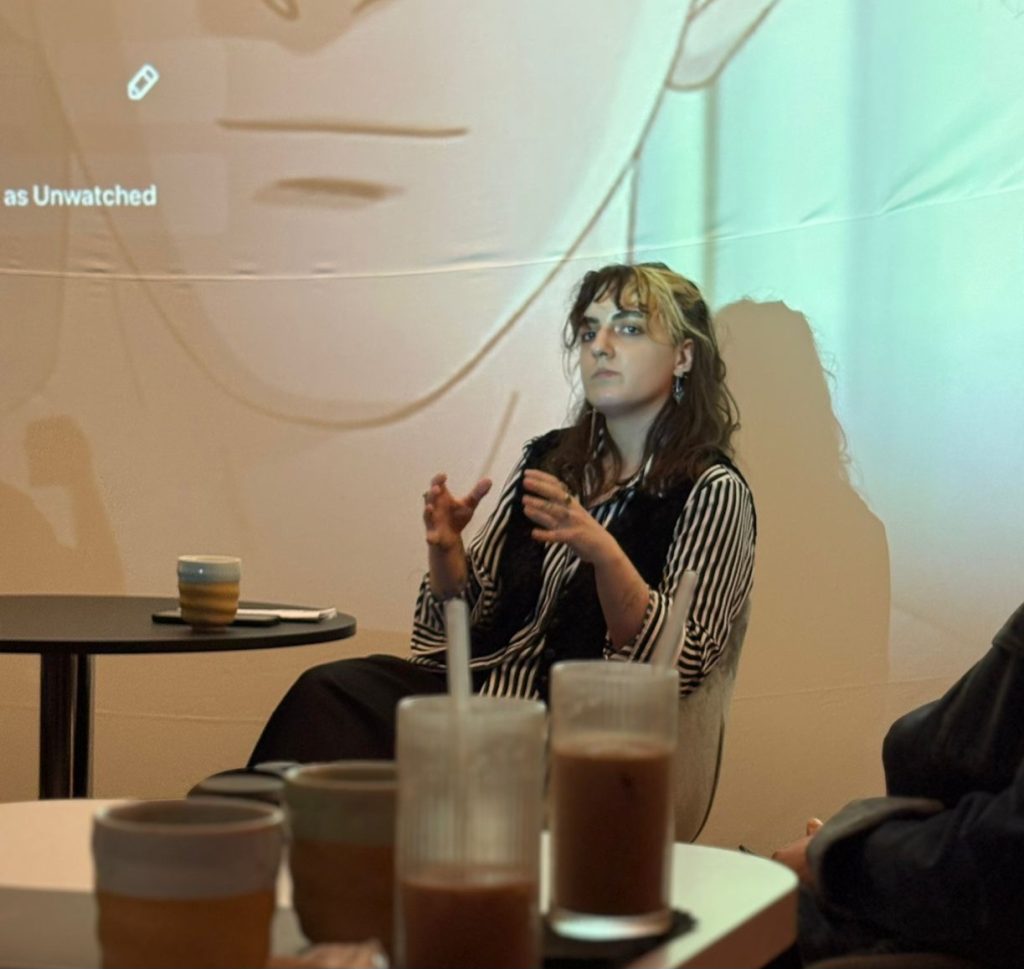
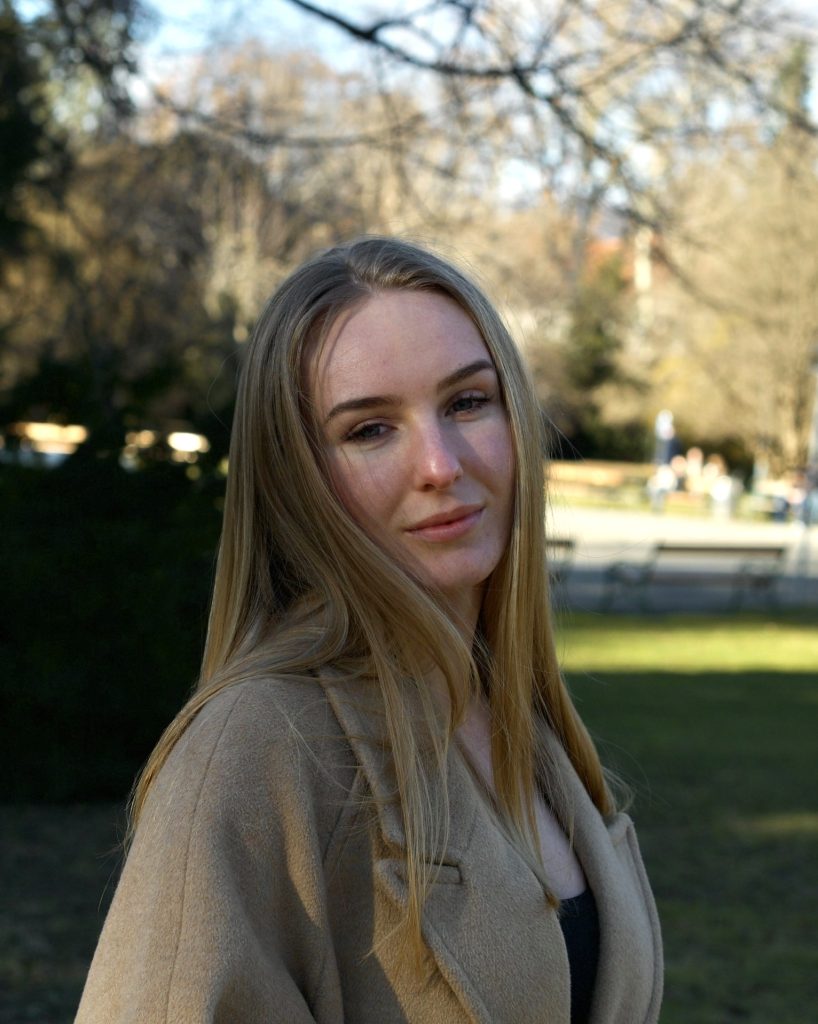
Paloma Puljic is a doctoral student and a NIHAI project assistant at the IDea_Lab, University of Graz. Her doctoral research examines questions of trust in conversational AI agents, with a particular focus on the normative expectations that shape human–AI interaction, and the implications these hold for AI ethics, design, and regulation. Underlying this work is a broader commitment to intergenerational justice, recognizing that the ethical and societal consequences of artificial intelligence extend well beyond the present, and that decisions made today will shape the informational and technological landscape inherited by future generations.
Affiliated researchers

Maximilian Theisen is a postdoctoral researcher at the Center for Cognitive and Decision Sciences at the University of Basel, Switzerland. Before coming to Basel, he did his doctoral studies at the University of Heidelberg, Germany, on lay concepts of moral uncertainty.
Currently, Maximilian‘s main research interest is the folk epistemology of moral beliefs and how this can be studied using large-language models. At NIHAI, his focus lies on the epistemic dimensions of AI assertions.
Cristina Maria Tofan holds a Ph.D. in psychology. She is an assistant professor at the Department of Sociology and Social Assistance, Faculty of Philosophy and Social-Political Sciences at “Alexandru Ioan Cuza” University in Iași, Romania. She is also a scientific researcher at the “Gheorghe Zane” Institute of Economic and Social Research, part of the Romanian Academy, Iași Branch. She is a founding member and an active member of four non-governmental organizations dedicated to advancing scientific knowledge in psychology and enhancing professional competencies in psychology, human resources, and medical and social assistance, including the E team Psychology Association, the Romanian Positive Psychology Association, the Psyconas University Foundation, and the Industrial and Organizational Psychology Association.